
The Boy from Toison
By Tyler
"Sparking good conversations with anybody, especially a family member, is understandably hard, trust me; I've gone through many awkward ones, but once you break that barrier and grow more comfortable, you might even learn more about yourself than the other person."
Tyler: The wood below him gripped his feet, as the towering chunk of metal floating on the rippling water arrives at shore, casting a dark shadow on the dock. He gazed at the baggage beside him, then up to his mother and brother who were getting ready to step on the metal ship. His mother grabbed him under his arms and lifted him off the dock, ripping the roots that held onto him during his childhood, and only leaving the bits and pieces of its remains wrapped around his shoes and ankles. As he is placed on the uneven surface of the boat, he lands with an unfamiliar metal thud which catches his curiosity to observe his new surroundings. After exploring, he stayed on the ship for several weeks with the same view of the endless water. Zái Jián, Toison.
My grandpa, Paul Choi, was born in Toison, China, and lived there until he was nine. While he was there, he would go to a small school and learn about grammar. He lived with his mother and brother in the village, while his grandpa lived in the city, and his grandma lived in another house.
At the age of nine, my grandpa immigrated to America with his brother and mother; but usually his family and ancestors would come to America to find work at the age of sixteen. The main reason he came over was because World War II was becoming part of China and Japan already invaded.
As a result, only two ships were coming after this. The names of the ships were the Cleveland and the Wilson. My grandpa's mother had to make a quick decision, to stay in China or move to America. She decided to take her chances and took the Wilson.
Grandpa: From Hong Kong to Japan, and then Shanghai, and then Honolulu, and, uh, San Francisco, and Los Angeles.
Tyler: In 1940, my grandpa arrived in America after a several week trip and saw a new modern city—San Francisco.
Around the age of 17 and 18, my grandpa had to stop going to school and start working because it was becoming hard to pay for his education due to a lack of financial support. But, it wouldn't matter whether he got an education or not because race played a big factor in the job he was chosen for.
One of the biggest things that I've learned from my grandpa is that he's a very hard worker. After dropping out of school, he would work as a maintenance worker in the shipping industry.
Grandpa: I was working at least eight hours a day, up to seven days a week. And then that, because, that when the more time you put in, the more money you're gonna make, and money was one of the important things in how to get ahead.
Tyler: Later, he was drafted in the army during the Korean war as an interpreter and cook; where he served four to five-hundred people per meal each day.
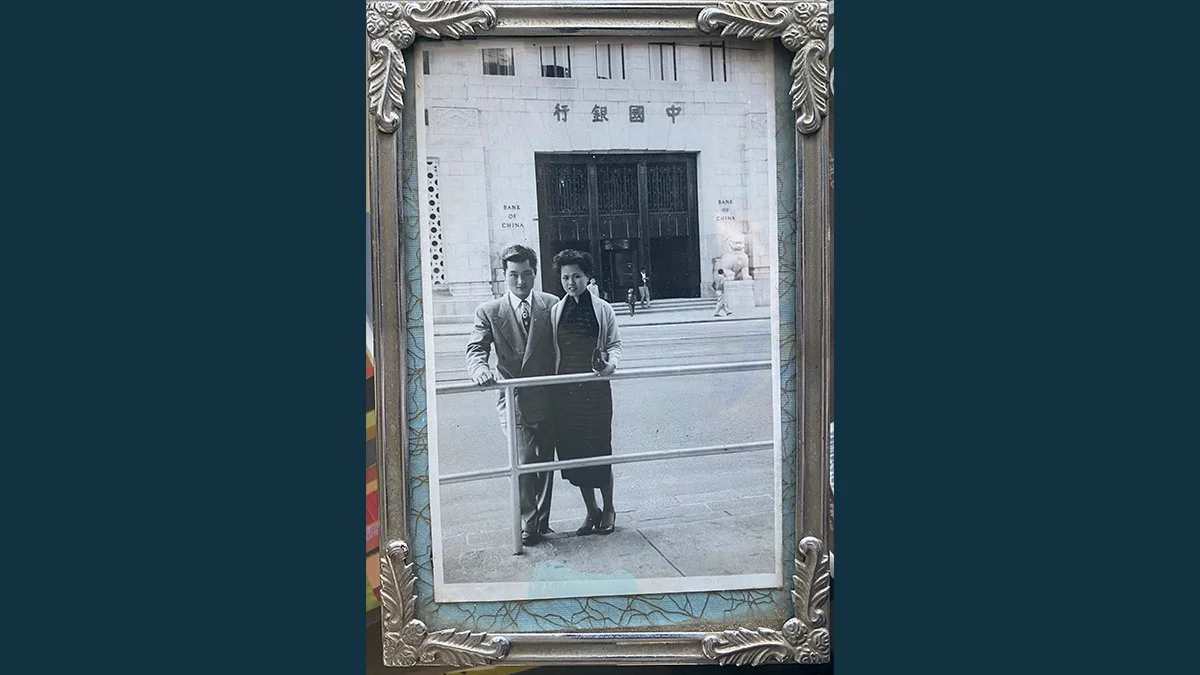
Then, he met my grandma through her sister and they got married in Hong Kong. He came back to America with her and started a family. He spent a lot of his time every day going to work to support his family, continuing the same eight hours, seven days a week schedule.
After the years I've been with my grandpa, I have seen the hard work he has been doing. I seen him in his garden, which was once covered in weeds, growing apple trees from small sprouts. I seen him manage an apartment complex for several years. I seen him fixing cars and refrigerators, and all of this happened after he retired. He continues to work hard, not letting age stop him from working. His determination inspires me to work as hard as him.
As my grandpa grew older, he learned that money holds a lot of power in our society, and it chooses who has power and who doesn't. He says that the most important thing you need to know to survive is that:
Grandpa: You got to know a system, our system is money makes money. So it's more important to make some, but you gotta save some, you don't save some and you always just enough to survive.
For an average person, you could almost say that half of your money goes to, is not in your pocket, it goes to taxes one way or the other. And then with the other half, you need to survive, right? So it's impossible for you to have money to invest for the money to make the money. So it's very important for you, no matter what, to save some.
Tyler: Looking over my grandpa's thoughts now, I think about how he grew to care a lot for money and survival. Then I'm reminded of his roots of where he came from. At the young age of nine, he entered America without knowing any English and had to hustle his way to support himself. He didn't have the money to gain a proper education, so he had to find a job in manual labor. He was always looking for ways to survive in America because he was raised from a place where he didn't have much, nor was given much opportunities to gain much. He had to become more mature at a younger age because he needed to survive, and that's why he cared so much about his and others’ survival. He continues to work hard today because that's something that was built into him.
After interviewing my grandpa, I learned that he is a very determined person, and I see that reflected upon myself. Like him, I would constantly work to achieve my goals and set new goals for myself to grow, but I didn't know we shared much in common before this interview. I always felt that there has been a disconnection between me and my grandpa because of our age differences. But after listening to him talk, I see there's some things that we share in common, like our enjoyment in socializing and our determined spirits. Though I knew that he likes to talk, I just never approached him because I felt like he would only talk about finances and the economy—which he did—but there were so many other things that he said I wouldn't have ever known about without this conversation. Sparking good conversations with anybody, especially a family member, is understandably hard; trust me, I've gone through many awkward ones, but once you break that barrier and grow more comfortable, you might even learn more about yourself than the other person.